



From busy town centers in Massachusetts to school zones in Connecticut, Maine, New Hampshire, Rhode Island, and Vermont, drivers and pedestrians often share roads where visibility and yielding can be a challenge. Rectangular Rapid Flashing Beacons, commonly called RRFBs, can make established crossings more conspicuous when pedestrians need to cross.
RRFBs are pedestrian- or bicyclist-activated warning devices that use rapidly flashing yellow LED indications to draw a driver’s attention to a marked crosswalk. The Federal Highway Administration identifies RRFBs as a proven pedestrian safety countermeasure and notes that they can significantly increase driver yielding behavior. They can be used with pedestrian, school, and trail crossing warning signs when installed in accordance with applicable standards.
What New England communities should know
-
RRFBs are intended to increase the visibility of marked crossings on uncontrolled roadway approaches, rather than replace traffic signals or STOP signs.
-
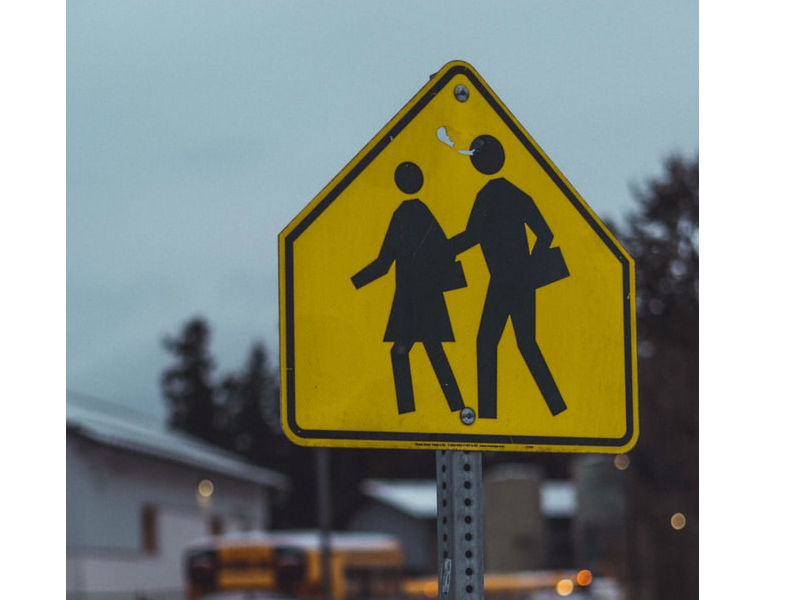
They can supplement school crossing warning signs, making them relevant for communities evaluating safety near schools.
-
New England conditions such as early winter sunsets, rain, snow, and changing seasonal visibility can make conspicuous crossing treatments especially valuable to evaluate.
-
RRFBs may be activated by a pushbutton or pedestrian detection system and remain dark when they are not activated.
-
Selecting an RRFB location should be based on roadway conditions, pedestrian needs, and applicable engineering standards rather than simply installing flashing devices at every crosswalk.
Why RRFBs Matter for Pedestrian Safety Across New England
RRFBs matter across New England because they provide an additional visual warning at marked crossings where signs and pavement markings alone may not give approaching drivers enough conspicuity. The rapid yellow flashing pattern is intended to attract driver attention when someone is preparing to cross.
The region includes everything from dense streets around Boston and Providence to smaller downtown corridors in Vermont, Maine, and New Hampshire. School entrances, village centers, transit stops, recreational trails, and multilane roads can all create different crossing challenges.
Seasonal conditions add another consideration. Fall and winter bring fewer daylight hours, while rain, snowbanks, road salt, and winter grime can affect the roadway environment. RRFBs do not eliminate these challenges, but properly selected and maintained devices can become one part of a broader pedestrian safety strategy.
Worksafe Traffic Control Industries supports communities and transportation professionals considering traffic control solutions for these environments. We understand that the right crossing treatment must fit the roadway, location, and applicable requirements rather than rely on a one-size-fits-all approach.
What Federal Safety Guidance Says About RRFBs
Federal guidance recognizes RRFBs as a pedestrian safety countermeasure designed to improve the conspicuity of people at uncontrolled marked crosswalks. FHWA reports that research has found motorist yielding rates as high as 98 percent at marked crosswalks with RRFBs, although results vary according to roadway characteristics and location.
Those qualifications matter. Posted speed, crossing distance, number of lanes, roadway direction, and the characteristics of an individual site can influence performance.
FHWA also notes that RRFBs are particularly effective at multilane crossings with speed limits below 40 mph. The agency recommends considering significant pedestrian safety needs when selecting locations rather than overusing the treatment.
How RRFBs Can Affect Local Pedestrian and School Crossings
RRFBs can improve local crossings by giving motorists a conspicuous visual cue precisely when a pedestrian or bicyclist activates the system. That distinction can be useful on roads where a static crossing sign may blend into the surrounding roadside environment.
Around a school, for example, arrival and dismissal create concentrated periods of pedestrian activity. In a downtown district, pedestrians may cross throughout the day. Near a trail in Maine or Vermont, activity may change substantially by season.
An RRFB can supplement the appropriate pedestrian, school, or trail crossing warning sign at a marked crosswalk. Under the current MUTCD, RRFBs are specifically addressed in Chapter 4L.
Signs a Crossing May Need Additional Safety Attention
A crossing may deserve further safety evaluation when drivers frequently fail to yield, pedestrians have difficulty being seen, or the roadway environment creates conflicts between people walking and moving vehicles.
Potential warning signs include:
-
Drivers regularly approaching a marked crossing without visibly slowing.
-
Pedestrians waiting for extended periods for a safe opportunity to cross.
-
A school crossing located on a busy road without active warning equipment.
-
Multiple travel lanes that increase pedestrian exposure.
-
A crossing near a trail, park, transit stop, or other pedestrian destination.
-
Visibility challenges caused by roadway geometry, roadside features, or seasonal conditions.
-
Existing signs and markings that may not provide enough conspicuity for the location.
These conditions do not automatically mean an RRFB is the correct treatment. They indicate that the crossing may warrant professional or agency evaluation.
When Should a Community Consider an RRFB?
A community should consider an RRFB when an uncontrolled marked crosswalk needs greater pedestrian conspicuity and engineering evaluation supports the treatment. FHWA guidance allows RRFBs to supplement pedestrian, school, and trail crossing warning signs at appropriate marked crosswalks.
RRFBs are not intended for every intersection. With limited exceptions described in the MUTCD, they are not used on crosswalk approaches already controlled by STOP signs, YIELD signs, traffic control signals, or pedestrian hybrid beacons.
Municipalities, schools, campuses, and transportation agencies should therefore evaluate the entire crossing before selecting equipment.
Common Factors Behind Difficult New England Crossings
The most common crossing challenges in New England involve a combination of roadway design, traffic conditions, pedestrian activity, and visibility rather than one isolated cause.
Traffic speed and roadway width: Wider roads or roads carrying faster-moving traffic can require additional attention when agencies evaluate pedestrian crossings.
School arrival and dismissal: Short periods of concentrated vehicle and pedestrian traffic can create complicated interactions around school properties.
Seasonal visibility: Short winter days mean school dismissal, commuting, and other pedestrian trips may occur near dusk or after dark.
Changing roadside conditions: Snow accumulation and winter maintenance can alter sightlines and the space available around curbs and sidewalks.
Mixed road users: Downtown corridors and trail crossings can bring drivers, pedestrians, and bicyclists into the same limited area.
How Communities Can Maintain Effective RRFB Installations
Effective RRFB installations require ongoing inspection and maintenance so signs, markings, activation equipment, and flashing indications continue functioning as intended.
Local agencies should routinely check visibility, physical condition, pedestrian activation, beacon operation, signs, and pavement markings. Winter deserves particular attention across New England because snow and ice operations can affect roadside equipment and crossing accessibility.
FHWA notes that solar power can be used for RRFB installations, which may provide another option where supplying conventional power is difficult. Site conditions and system requirements still need to be evaluated before equipment is selected.
What Results Can Communities Expect From RRFBs?
Communities can reasonably expect a properly selected RRFB to make an established crossing more conspicuous and encourage greater driver awareness and yielding, but results depend on the specific roadway. RRFBs should be treated as part of a complete crossing design rather than as a guarantee against crashes.
FHWA research and guidance support their ability to improve yielding behavior, while emphasizing that effectiveness varies by location and roadway characteristics.
The strongest approach considers the beacon together with signs, pavement markings, sight distance, accessibility, lighting, roadway geometry, and other appropriate countermeasures.
Common RRFB Planning Mistakes
Common RRFB planning mistakes include choosing equipment before evaluating the crossing, assuming every crosswalk needs the same treatment, and overlooking long-term maintenance.
Mistake: Installing active warning equipment without considering roadway control.
Consequence: The proposed application may not align with MUTCD requirements.
Better approach: Confirm the traffic-control environment and applicable standards first.
Mistake: Treating an RRFB as a complete pedestrian safety solution.
Consequence: Other visibility or roadway-design issues may remain.
Better approach: Evaluate signs, markings, lighting, accessibility, and crossing geometry together.
Mistake: Forgetting New England maintenance conditions.
Consequence: Snow, road grime, vegetation, or equipment problems may reduce visibility or performance.
Better approach: Include inspection and seasonal maintenance in the project plan.
A Common New England School Crossing Scenario
A common New England scenario is a school located along an uncontrolled local or state roadway where students must use a marked crossing during concentrated morning and afternoon periods.
Static signs and pavement markings identify the crossing, but the community wants to make pedestrians more conspicuous to approaching drivers. After an appropriate engineering evaluation, an RRFB paired with the required school crossing warning sign may be one treatment considered.
This is a representative scenario, not a Worksafe Traffic Control Industries case study.
Related Pedestrian Crossing Solutions
Pedestrian crossing safety can involve RRFBs alongside appropriate signs, pavement markings, posts, activation equipment, and other traffic control components selected for the specific site.
We can help customers explore traffic control equipment suited to pedestrian and school crossing applications while keeping installation requirements, visibility, operation, and maintenance in mind.
Comparing RRFBs With Other Crossing Treatments
RRFBs are best understood as one crossing treatment among several, with the appropriate choice depending on traffic control, roadway design, pedestrian demand, speed, and other site conditions.
A standard marked crosswalk provides a defined crossing location. Enhanced signs and markings can improve visibility. RRFBs add an active flashing warning when pedestrians or bicyclists activate the system. Other locations may call for different measures, such as refuge islands, raised crossings, improved lighting, or pedestrian hybrid beacons.
The goal is not to choose the most conspicuous device automatically. It is to match the treatment to the crossing.
RRFB Applications Across New England
RRFB applications may be considered throughout Massachusetts, Connecticut, Rhode Island, Maine, New Hampshire, and Vermont where an appropriate uncontrolled marked crossing needs greater conspicuity. Communities from the Boston and Worcester areas to Providence, Hartford, Portland, Manchester, and Burlington face different roadway conditions, so site-specific evaluation remains essential.
What Can Happen When Crossing Problems Go Unaddressed?
Leaving a known crossing visibility problem unaddressed can allow conflicts between motorists and pedestrians to continue, particularly where traffic patterns, school activity, or seasonal conditions already make crossing difficult.
The answer is not necessarily an RRFB at every location. The better response is to evaluate the crossing and determine which combination of traffic control and pedestrian safety measures fits the site.
FAQ
Are RRFBs allowed at school crossings in New England?
Yes. Federal MUTCD provisions allow RRFBs to supplement an S1-1 School crossing warning sign at an appropriate marked crosswalk across an uncontrolled approach. The individual installation still needs to meet applicable federal, state, and local requirements, so agencies should evaluate the site before specifying equipment.
Do RRFBs make drivers stop for pedestrians?
RRFBs are designed to increase pedestrian conspicuity and driver awareness rather than physically force vehicles to stop. FHWA research has found substantial increases in driver yielding at appropriate installations, but yielding rates vary based on factors including speed, roadway width, traffic direction, and crossing location.
Can Massachusetts communities use RRFBs at every crosswalk?
No. RRFBs are intended for specific applications rather than every marked crosswalk. Current MUTCD provisions generally limit them to marked crossings across uncontrolled approaches and specify which crossing warning signs they can supplement. Massachusetts agencies should also account for applicable state and local requirements when planning an installation.
Are RRFBs useful during New England winters?
RRFBs can provide an active visual warning throughout the year, but winter maintenance remains important. Snow accumulation, road grime, access to pushbuttons, sign visibility, and other site conditions should be checked regularly so the crossing and its equipment remain visible and usable during winter weather.
Can an RRFB be installed at a traffic signal in Connecticut or Rhode Island?
Generally, no. The MUTCD states that RRFBs are not used for crosswalks across approaches controlled by traffic signals, with specific exceptions for certain other roadway situations described in the standard. Connecticut and Rhode Island projects should be evaluated against current applicable requirements before equipment is selected.
Can RRFBs be solar powered in Maine, New Hampshire, or Vermont?
Yes, solar-powered RRFB systems are an option recognized in FHWA guidance. However, system selection should account for the individual site’s solar exposure, equipment requirements, placement, and operating conditions. Northern New England installations should be designed with year-round environmental and maintenance conditions in mind.
Do pedestrians always have to press a button to activate an RRFB?
No. FHWA notes that RRFBs may use pushbuttons or passive pedestrian detection, such as video or infrared detection. The appropriate activation method depends on the crossing design, equipment, user needs, and applicable requirements. The beacons should remain unlit when they are not activated.
What should a town evaluate before choosing an RRFB?
A town should evaluate traffic control, vehicle speeds, roadway width, pedestrian activity, crossing distance, visibility, accessibility, and existing signs and markings before selecting an RRFB. The purpose is to determine whether an RRFB is appropriate for that specific crossing and how it should fit into the overall safety treatment.
Improve Crossing Visibility With the Right Safety Equipment
Safer pedestrian and school crossings start with choosing traffic control equipment that fits the roadway, users, and local New England conditions. We can help you explore RRFB and related crossing safety solutions for your project.