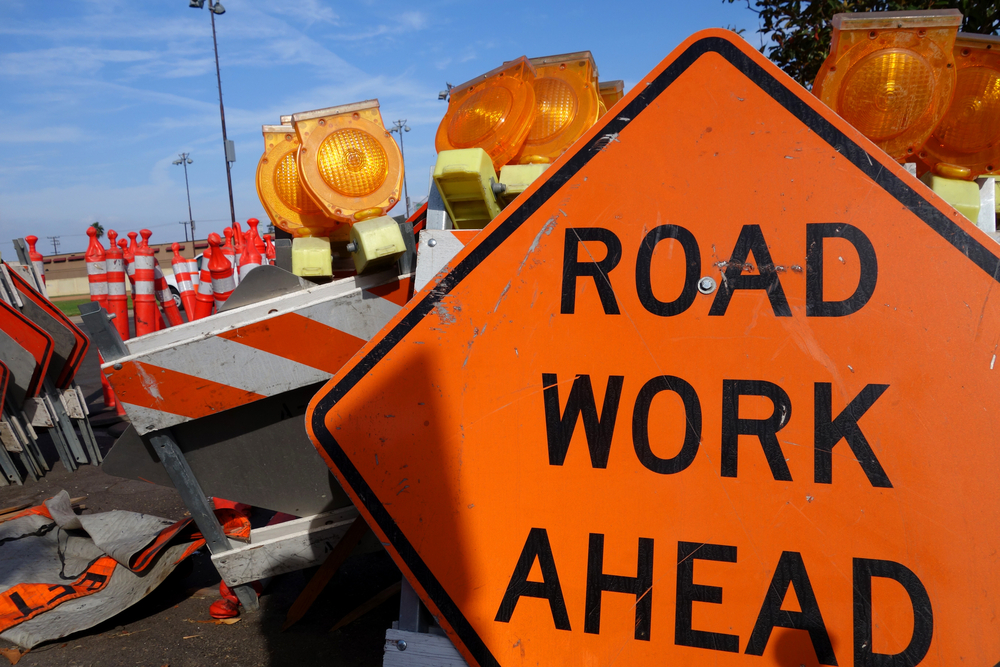
Work zones are among the most complex and hazardous environments on today’s roadways. They introduce unexpected driving conditions, altered traffic patterns, and increased cognitive demands for motorists who may already be distracted or fatigued. One of the most critical factors influencing safety in these environments is work zone sign spacing.
When work zone signs are properly spaced, drivers receive information in a logical sequence that allows them to anticipate changes, slow down gradually, and navigate safely. When sign spacing is incorrect, even fully compliant signs can fail. Poor spacing increases confusion, delays driver reactions, and significantly raises the likelihood of crashes.
Understanding how improper sign spacing contributes to work zone accidents is essential for contractors, agencies, and municipalities responsible for roadway safety and MUTCD compliance.
Why Work Zone Sign Spacing Matters
The purpose of work zone sign spacing is to match how drivers process information at different speeds and under varying conditions. Drivers require adequate distance to detect a sign, read and understand the message, decide on an action, and safely carry it out. This process is known as perception reaction time.
Proper spacing ensures that each sign reinforces the message of the previous one without overwhelming the driver. Advance warning signs alert drivers to upcoming changes. Transition area signs guide lane shifts or merges. Activity area signs reinforce expectations and warn of workers and equipment. Termination signs clearly indicate the end of the work zone.
When signs are spaced too closely, drivers may not have enough time to process each message. When signs are spaced too far apart, drivers may forget or misinterpret instructions. Both scenarios increase crash risk.
Human Factors and Driver Error in Work Zones
Improper sign spacing directly impacts human factors, which play a major role in work zone crashes. Drivers have limited attention and working memory, especially at higher speeds. Closely spaced signs can cause information overload, leading drivers to miss critical warnings or make sudden, unsafe decisions.
Excessive spacing creates a different problem. Drivers may become uncertain whether they are still in a work zone or whether earlier instructions still apply. This uncertainty often leads to hesitation, abrupt braking, or late lane changes.
Common human factor issues caused by poor sign spacing
| Driver Impact | Safety Consequence |
|---|---|
| Insufficient time to read signs | Missed warnings or instructions |
| Increased cognitive load | Slower or incorrect decisions |
| Stress and confusion | Aggressive or erratic maneuvers |
| Delayed lane changes | Higher risk of side swipe crashes |
Rear End Collisions and Improper Sign Spacing
Rear end crashes are one of the most frequent and severe crash types in work zones. Improper sign spacing is a major contributing factor.
When warning signs are placed too close to the activity area, drivers may not have enough distance to slow down gradually. Sudden braking increases the likelihood of rear end collisions, especially in congested traffic.
When the first warning sign is placed too far upstream without reinforcement, drivers may resume normal speeds before reaching the work zone. If they then encounter stopped traffic or a lane closure, the risk of a high speed rear end collision increases.
Consistent and properly spaced signs help create a smooth deceleration pattern. This reduces speed differentials between vehicles, which is a key factor in reducing crash severity.
Lane Change Conflicts and Side Swipe Crashes
Lane closures require drivers to merge safely, often under time pressure and in heavy traffic. Improper sign spacing disrupts this process.
When merge warnings and lane closure signs are placed too close together, drivers delay merging until the last possible moment. This leads to aggressive driving, forced merges, and side swipe crashes at the taper.
In high volume corridors, poor spacing can also cause uneven lane usage. Some drivers merge too early, creating unnecessary congestion, while others wait too long and create conflict points.
Benefits of proper lane closure sign spacing
| Outcome | Safety Benefit |
|---|---|
| Early awareness of lane reductions | Fewer sudden maneuvers |
| Predictable merging behavior | Reduced conflict at tapers |
| Balanced lane usage | Improved traffic flow |
| Lower driver frustration | Reduced aggressive driving |
Nighttime and Low Visibility Risks
Improper sign spacing becomes even more dangerous at night and during adverse weather. Reduced visibility shortens the distance at which drivers can detect and read signs.
At night, glare from headlights, work lights, and reflective surfaces can cause closely spaced signs to visually blend together. Signs that are spaced too far apart may not be visible long enough for drivers to react safely.
In fog, rain, or snow, visibility distances can drop dramatically. Sign spacing that works in clear daylight conditions may be inadequate during poor weather, increasing the likelihood of delayed reactions and crashes.
Because of these risks, many agencies apply more conservative spacing and rely on enhanced visibility tools such as illuminated signs, portable message boards, and dynamic warning systems in critical locations.
MUTCD Standards and Legal Implications
The Manual on Uniform Traffic Control Devices provides detailed guidance on work zone sign spacing based on roadway type, speed, and traffic conditions. These standards are grounded in research on driver behavior, crash data, and human factors engineering.
Failure to follow MUTCD sign spacing guidelines increases safety risks and can expose agencies and contractors to legal liability. In crash investigations, improper spacing is often viewed as a deviation from accepted practice.
It is important to note that MUTCD standards represent minimum requirements. Complex work zones, high speed roadways, and constrained environments often require additional signs, reduced spacing, or supplemental technologies to achieve safe outcomes.
Using Smart Work Zone Technology to Address Spacing Challenges
Modern work zones increasingly rely on technology to supplement traditional signage and overcome physical spacing limitations.
Portable changeable message signs can deliver real time warnings that static signs cannot. Queue detection systems alert drivers to stopped or slow traffic ahead, reducing rear end crashes. Dynamic lane merge systems adjust messaging based on traffic conditions to improve compliance.
These tools are especially valuable where roadway geometry, urban density, or environmental constraints limit ideal sign placement. When used correctly, smart work zone technology enhances driver awareness and compensates for spacing challenges.
Maintenance and Consistency Are Critical
Even well spaced signs lose effectiveness if they are damaged, missing, or misaligned. Inconsistent sign placement disrupts the information sequence drivers rely on and can reduce trust and compliance.
Long term work zones are particularly vulnerable as conditions change over time. Temporary fixes, shifted signs, or removed panels can gradually undermine spacing integrity.
A strong maintenance strategy includes routine inspections, prompt repairs, and ongoing adjustments as traffic patterns and speeds change. Coordination between design, deployment, and maintenance teams is essential.
Why a Holistic Work Zone Safety Strategy Works
Improper sign spacing is rarely an isolated issue. It often reflects broader challenges such as limited planning, budget constraints, or evolving site conditions.
A holistic approach considers the entire driver experience from first warning through work zone termination. Integrating proper spacing, compliant design, smart technology, and continuous management creates safer, more predictable work zones.
This approach reduces crashes, improves traffic flow, minimizes delays, and protects both motorists and workers.
Partnering With Smart Work Zone Experts
Given the complexity of modern work zones, working with experienced traffic control professionals is one of the most effective ways to reduce crash risk.
Worksafe Traffic Control Industries has provided smart traffic safety solutions throughout New England for more than twenty five years. As a manufacturer of municipal, highway, construction, and commercial signs and a reseller of traffic control devices and equipment, we support projects of all sizes with both sales and rental options.
Our fleet includes message signs, arrow boards, traffic signals, trailer mounted video cameras, queue detection systems, speed signs, and microwave technologies. We specialize in smart work zone and real time traffic solutions, delivering full service support from design and deployment through short or long term 24 7 maintenance and equipment repair.
If your organization is looking to reduce work zone crash risk, improve driver compliance, and deploy safer traffic control strategies, Worksafe Traffic Control Industries can help. Contact us to learn how expert planning, advanced technology, and comprehensive support can protect drivers and workers every day.